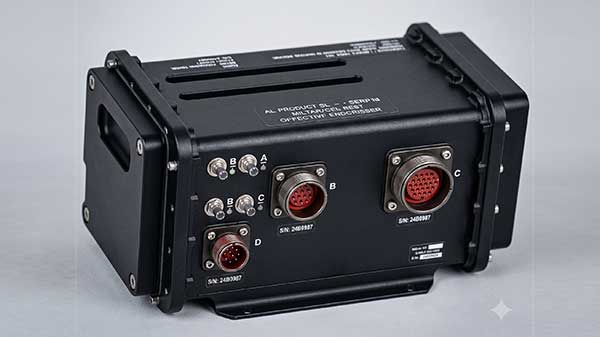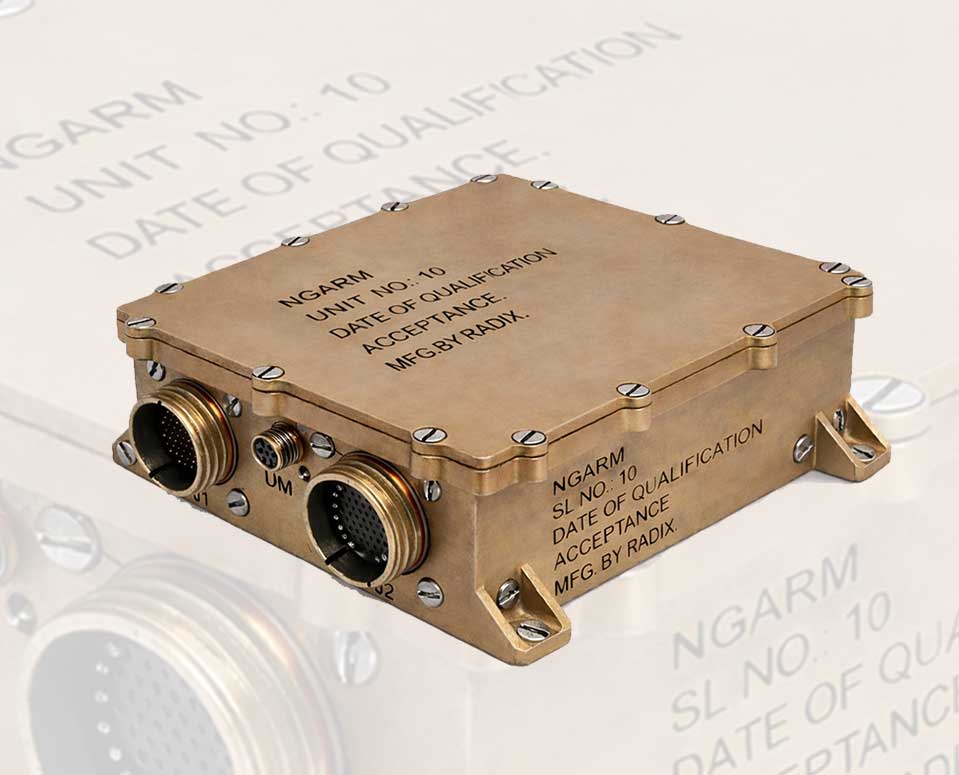
ON-BOARD COMPUTER (OBC)

The central processing and control unit for missile mission management, communication, guidance and system coordination — the primary missile-to-aircraft interface in the NGARM.

ON-BOARD COMPUTER (OBC)

Technical Overview

The On-Board Computer (OBC) is a critical subsystem of modern missile systems, serving as the central processing and control unit responsible for mission management, communication, guidance, and system coordination. In the Next Generation Anti-Radiation Missile (NGARM), the OBC is integrated into the Store Avionics and acts as the primary interface between the missile and the host aircraft.

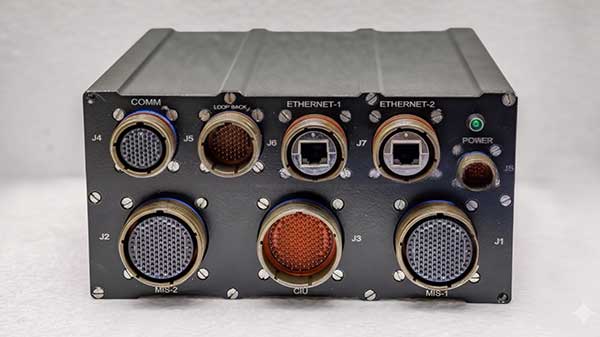
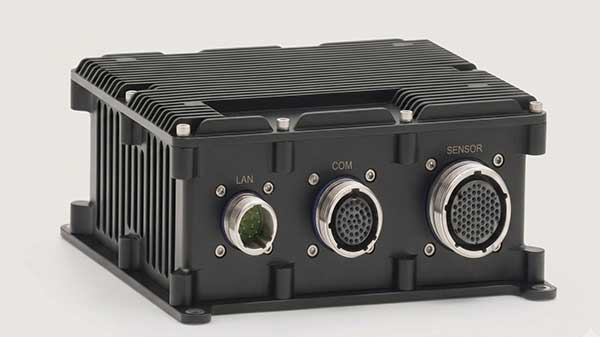
The OBC communicates with various aircraft subsystems, including the Mission Computer, Master Inertial Navigation System (INS), and Display Computer, to receive mission data, pilot commands, and navigation information. It also interfaces with several onboard missile subsystems such as the Fiber Optic Gyroscope (FOG)-based INS, RF Seeker, Altimeter, Two-Way Data Link (TWDL), Telemetry System (TM), Engine Control Unit (ECU), Programmable Impact Delay Fuse (IDF), System Relay Box (SRB), Linear Electro-Mechanical Actuation (LEMA), and Rotary Electro-Mechanical Actuation (REMA)

During the pre-release phase, the OBC performs pilot authentication, release-related initialization, and range basket communication with the aircraft. Following missile release, it executes mission sequencing, guidance and control algorithms, navigation processing, and communication with onboard subsystems to ensure accurate target engagement and mission completion. The OBC is built around an ARM Cortex-A9 processor, providing high computational performance, real-time processing capabilities, and reliable communication through multiple high-speed interfaces. Its robust architecture enables deterministic operation in demanding defense environments.
Key Capabilities

Centralized Mission Control: Acts as the main processing unit for coordinating all missile subsystems.

Real-Time Processing: Executes guidance, navigation, control, and mission sequencing with low latency.

High Computational Performance: ARM Cortex-A9 processor provides fast and efficient data processing.

Multi-Subsystem Integration: Interfaces with INS, RF Seeker, Altimeter, TWDL, ECU, Telemetry, LEMA, REMA, and other onboard systems.

Reliable Communication: Supports high-speed and secure communication with aircraft avionics and missile subsystems.

Improved Navigation Accuracy: Processes navigation and sensor data to enhance missile guidance and target tracking.

Mission Flexibility: Supports pre-release initialization, pilot authentication, and post-release mission execution.

Fault Detection and Diagnostics: Monitors subsystem health and enables fault reporting for improved system reliability.

Rugged and Reliable Design: Operates under extreme environmental conditions, including shock, vibration, and temperature variations.

Low Power Consumption: Optimized embedded architecture provides high performance with efficient power utilization.

Scalable Architecture: Easily adaptable to future missile upgrades and additional onboard subsystems.


Technical Specifications

Processor

ARM Cortex-A9

Subsystem interfaces

INS, RF Seeker, Altimeter, TWDL, ECU, TM, IDF, SRB, LEMA, REMA

Role

Store Avionics interface (NGARM)

Power

Low-power optimized embedded architecture.

Other products

Embedded Launch Pad Computer (ELPC)

A vital component of a Surface-to-Air Missile (SAM) system, controlling and coordinating all pre-launch and launch operations.

8-Port-Ethernet-Switch

8-Port Ethernet Switch

A compact, high-performance networking device providing reliable data communication in embedded, industrial, aerospace and defense applications.

Landing-Gear-Controller

Landing Gear Controller (LGC)

A critical avionics subsystem responsible for controlling, monitoring and managing the safe extension and retraction of an aircraft's landing gear.