Electronic Warfare Receivers
A high-speed RF receiver that determines the frequency of an intercepted signal almost instantaneously, used in Electronic Warfare, Radar Warning Receivers and Electronic Support Measures.
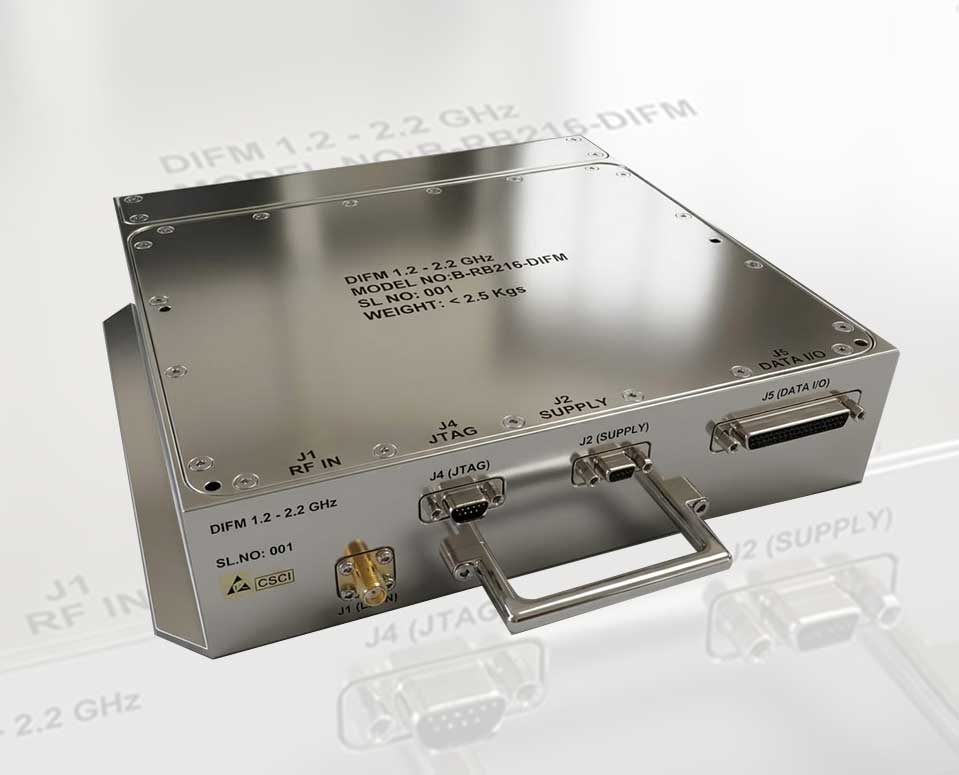
A Digital Instantaneous Frequency Measurement (DIFM) receiver is a high-speed radio frequency (RF) receiver used primarily in Electronic Warfare (EW), Radar Warning Receivers (RWR), and Electronic Support Measures (ESM). Its primary function is to determine the frequency of an intercepted RF signal almost instantaneously, enabling the rapid detection and identification of threat emitters.
A DIFM receiver operates by digitizing the incoming RF or microwave signal using a high-speed Analog-to-Digital Converter (ADC). The digitized samples are then processed by a Field-Programmable Gate Array (FPGA) or Digital Signal Processor (DSP) to estimate the instantaneous frequency of each received pulse. Depending on the system architecture, algorithms such as phase-difference estimation, digital IFM, or Fast Fourier Transform (FFT)-based techniques may be employed.
Because the frequency estimation is performed digitally, DIFM receivers provide high measurement speed, wide instantaneous bandwidth, excellent accuracy, and the capability to process short-duration radar pulses — characteristics that make them well suited for modern EW systems, where rapid and reliable identification of multiple RF emitters is essential.
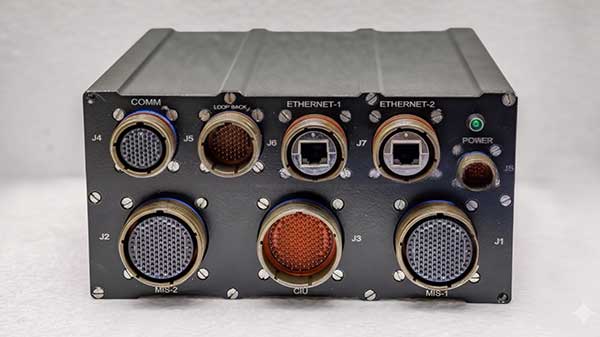
Very fast frequency measurement — typically nanoseconds to microseconds
Wide instantaneous bandwidth
High sensitivity and high dynamic range
Suitable for detecting short radar pulses and rapidly changing signals
Extremely fast response with accurate frequency estimation
Resolves multiple simultaneous signals better than traditional analog IFM receivers
FPGA / DSP-based frequency estimation
Nanoseconds to microseconds
Phase-difference, digital IFM, or FFT-based
High-speed ADC digitization
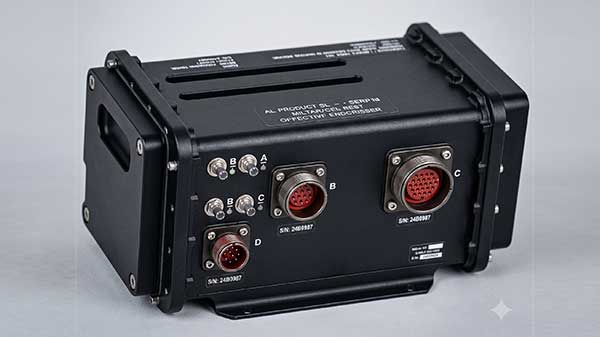
A vital component of a Surface-to-Air Missile (SAM) system, controlling and coordinating all pre-launch and launch operations.
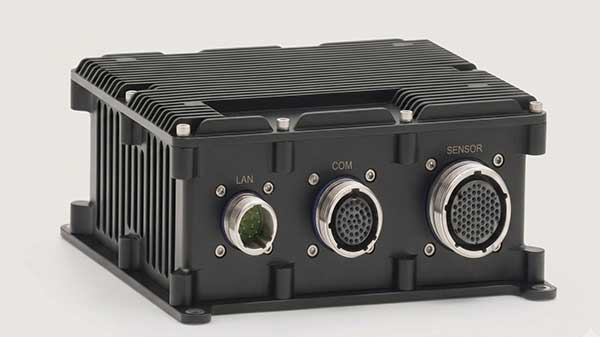
A compact, high-performance networking device providing reliable data communication in embedded, industrial, aerospace and defense applications.
A critical avionics subsystem responsible for controlling, monitoring and managing the safe extension and retraction of an aircraft's landing gear.
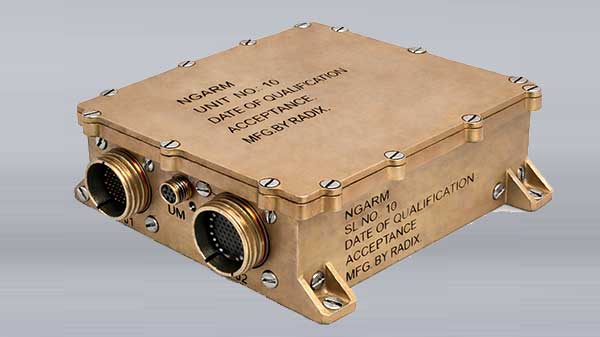
The central processing and control unit for missile mission management, communication, guidance and system coordination — the primary missile-to-aircraft interface in the NGARM.